
25 in 5
w. John Siggers
by Bernadette Condren
- How long were you associated with QSE and in what capacity?
I have been associated with QSE since 2017, when I was a member of the Apprentice cohort for that year. In 2019 I joined the company as a Core Ensemble member, holding the portfolio of Partnerships Manager. I was fortunate enough to have played the roles of Tybalt in Romeo & Juliet (2021), Macduff in Macbeth in the Dark (2020), Edmund Mortimer and the delightfully drunken Bardolph in Henry IV Part 1 (2019) and appeared in Tragedy of Socrates (2019). I was also a cast member for Shakespeare Shorts, and a facilitator on the Shakespeare Prison Project in 2020 and 2021.
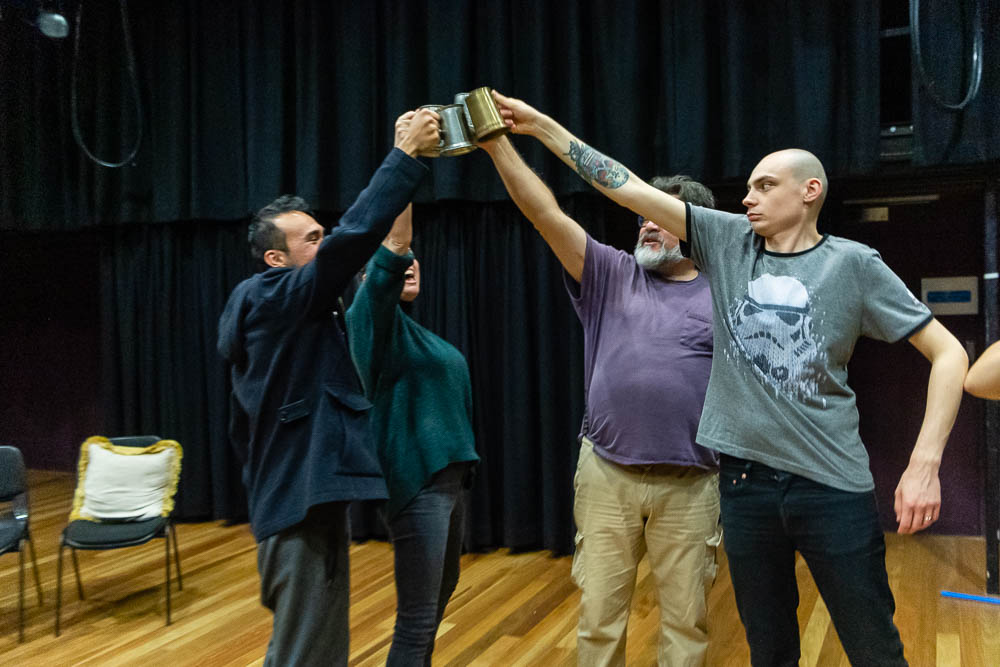
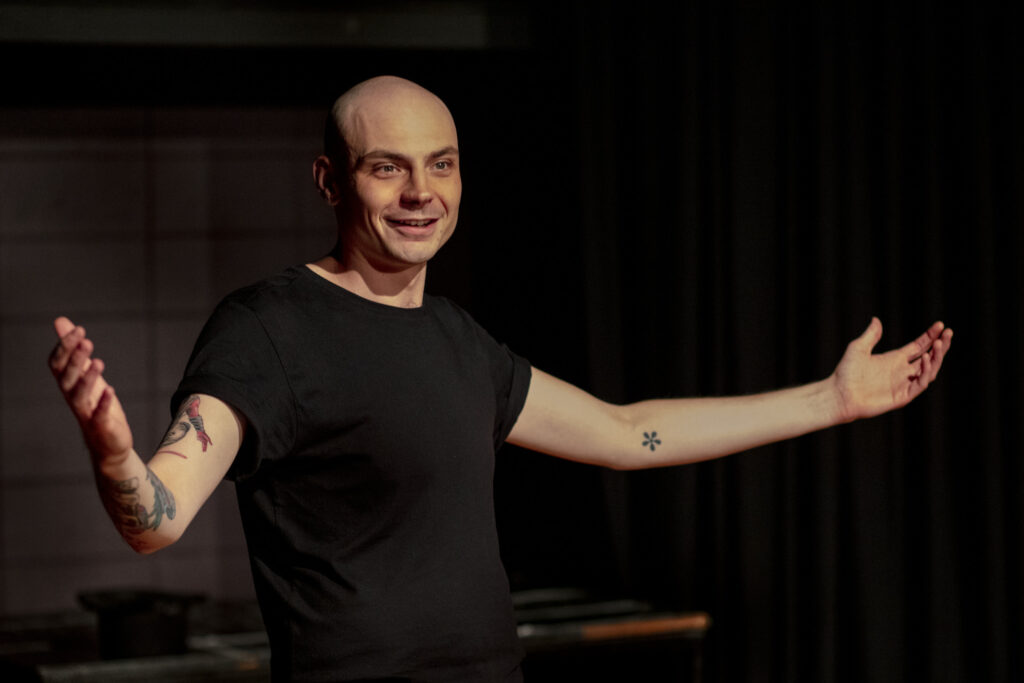

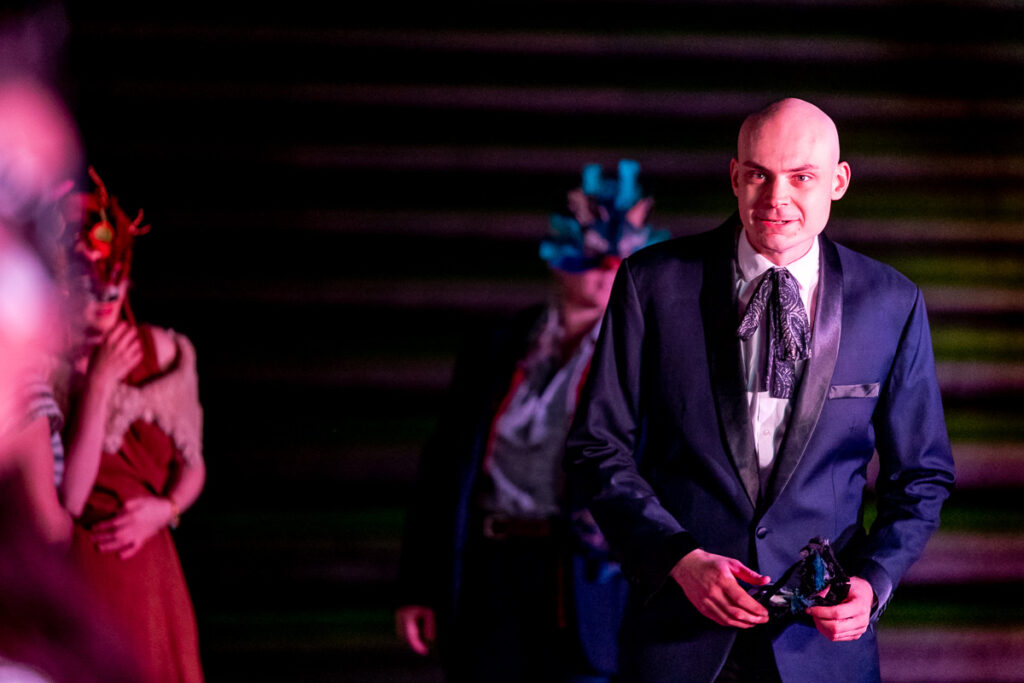
2. Favourite memory from your time at QSE?
There are many, some are fun, some are personally profound, and all are meaningful to me. Most of these involved training, rehearsing, and developing together as an Ensemble. Particularly, long days (and longer nights) on Stradbroke Island during the ‘Straddie Intensive’, where the community and emotional core of the Ensemble is formed for the upcoming season. The shared joys and exasperations of the facilitator group on our long drives to and from South East Queensland Correctional Centre during the 2020 and 2021 Shakespeare Prison Project
Performing, too, was always a joy. I am especially reminded of staging fight choreography at Roma Street Parkland and being very careful in such close proximity to the audience. On a practical level, during production as an Ensemble Member, moving fluidly between dealing with the needs of my Portfolio Role, which included planning the Gala nights and performance, was always a rewarding challenge.
Another memory that comes to mind is swinging a broom around in my spare room in order to sound sufficiently breathless before recording takes as Macduff for the final confrontation with Macbeth. This was during the recording sessions of Macbeth in the Dark, the radio play QSE produced during lockdown in 2020 (thus my sound booth was jerry-rigged with a duvet on some poles in the second bedroom). Whilst it’s amusing to reflect on the ways in which we had to get DIY with the production, the reality was that we produced something moving and powerful, created as a community in separation. When we were finally able to physically gather together and share in the joy of having created this work apart, that too was moving.
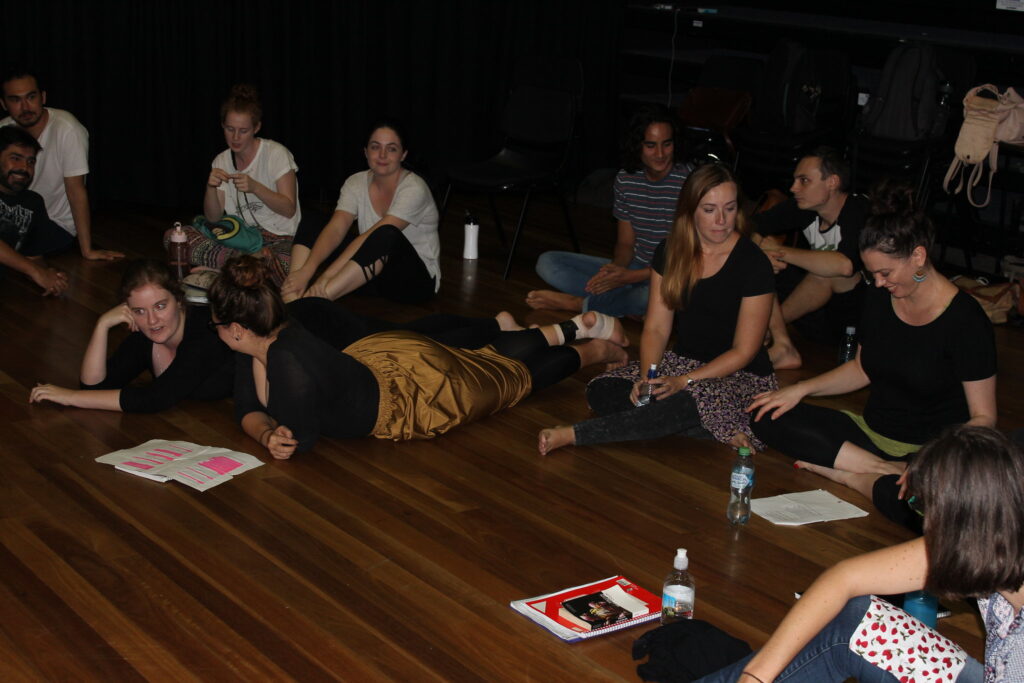
3. Why is QSE so important in Brisbane?
That QSE was founded as, and continues to be, an independent artist-led theatre company allows for the space to undertake creative and values-driven decisions within a professional framework. I believe that QSE exists both within the Brisbane theatre community, and apart from it; in a place where forms of artistic expression, theatrical training, education, community, and outreach are not siloed but embraced as part of a multifaceted theatrical practice. There is no shortage of talented, enthusiastic, passionate, caring and playful people in Brisbane that strive to create meaningful theatre, and QSE provides the framework to support their authentic expression through training, performance, facilitation, and community.
4. How does your time at QSE continue to inform any aspect of your life e.g. current job/profession?
Play. Commitment. Professionalism. Support. Accessible intellectualism. Breath. Authenticity. Emotional space. I still carry these feelings and ideals with me, even though I am no longer an Ensemble member, nor actively involved in theatre. I remind myself often to connect to my breath, and to speak authentically, in my own voice both personally and professionally. I believe my work with QSE, particularly through training, allowed me insights into myself, my relationships, and my ideals, and fostered a grounded intellectualism that has supported me to succeed in my growing professional and academic career.
5. What do you see as QSE’s legacy and why is Shakespeare still relevant in 2026?
I believe that QSE legacy will be remembered for the accessibility of text and performance, the play, musicality, and joy inherent in the company’s productions. These elements are fostered through a commitment to training and to working with all within the wider community. There are no spectators, there are no actors.
Brisbane is better for QSE, and may it last another 25 years and beyond.