
25 in 5
w. Amanda Bell
by Bernadette Condren
1. How long were you associated with QSE and in what capacity?
For three years from 2006-2008. During that time I had roles as QSE Apprentice, Committee Secretary, Business Manager, Mainstage Production Manager and Mainstage Stage Manager.
2. Favourite memory from your time at QSE?
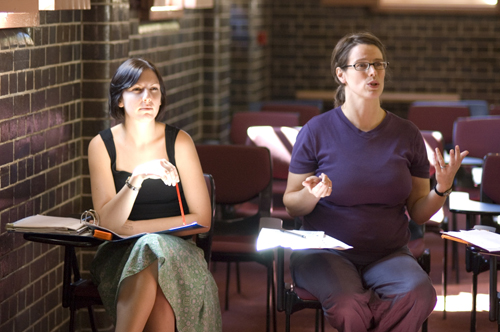
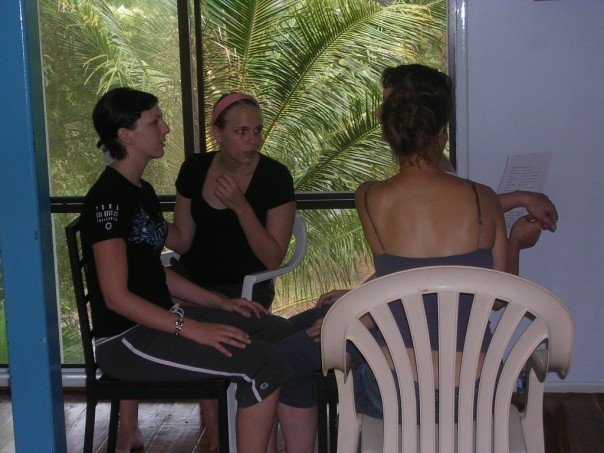
Broadly, I loved developing my skills as an arts administrator in a safe and supportive environment. More specifically, as an apprentice I really valued being able to train alongside the core ensemble. My favourite memories are from the training room. QSE actors are fun, funny and caring and generally great people to spend time with.
3. Why is QSE so important in Brisbane?
As a 25-year old organisation in a rapidly changing city, QSE provides an anchor for artists, audiences and collaborators. QSE is an important part of Brisbane because it has taken the time to build a familiar and much-loved voice through its body of creative works, its consistent training methodologies and philosophies, and its enduring commitment to community. The company is special in the way it nurtures community within its organisation, while valuing and prioritising the communities it performs for, and the communities it performs with. In a time of increasing social isolation, companies like QSE are absolutely essential.
Also – any professional arts organisation that is committed to training and providing opportunities for developing artists is crucial in Brisbane. Established and quality pipelines for new artists and art are critical to the ongoing creative life of our city.
4. How does your time at QSE continue to inform any aspect of your life eg current job/profession?
When Anne Pensalfini taught me how to be the QSE Committee Secretary in her living room in 2006 she was absolutely setting me up for my career in arts and higher education. I went on to become a business manager for small arts companies, a project manager for Queensland Arts Council, and finally a university administration and project manager, where I am currently business manager for an 86-year-old literary journal. It began on the Pensalfini couch in 2006!
5. What do you see as QSE’s legacy and why is Shakespeare still relevant in 2026?
I think QSE’s legacies include:
- Its philosophical commitment to communal ensemble principles.
- Its commitment to developing and training new and established artists.
- The way it has taken international methodologies like the Linklater technique and Theatre of the Oppressed, developed and shaped them with Brisbane artists and facilitators, and turned them into special local programs like the QSE Apprentice Program and QSE’s Shakespeare Prison Project.
Why is Shakespeare still relevant in 2026? Shakespeare is the beautiful vehicle that brings artists and audiences together, amplifies our voices, and helps us connect as a community!