
“Passing through Nature to Eternity”
By Rob Pensalfini
Without Tina Packer there would be no Queensland Shakespeare Ensemble. The techniques and ideas she learned from her mentor John Barton at the Royal Shakespeare Company, then developed and refined over decades in the mountains of New England, lie at the heart of QSE’s training and performance methodology. More importantly, however, it was Tina’s encouragement and close personal support over the past thirty years, especially in the early years of QSE, and her modelling of artistic leadership that was both visionary and collaborative, that ensured we created something that would grow to have longevity through its deep roots.
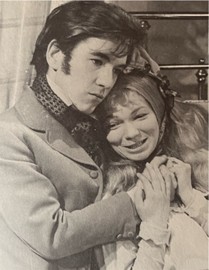
Born into a working class family in Wolverhampton, about an hour from Shakespeare’s birthplace, Tina trained at the Royal Academy of Dramatic Art and quickly came into the orbit of John Barton and the Royal Shakespeare Company. She appeared in the TV miniseries of David Copperfield in 1966 with Ian McKellen, and in Dr Who in 1968 as second Doctor Patrick Troughton’s companion, before moving to the United States in the 1970s, where she founded Shakespeare & Company with a troupe of American actors. Over time, Shakespeare & Company would grow to be (for a while) the largest year-round Shakespeare festival in the USA, training hundreds and employing scores of actors each year, and Tina would come to be recognised as one of the most influential Shakespeare directors and teachers of her age.
In 1996, Tina and several of her colleagues came to the Massachusetts Institute of Technology, where I was in the back end of a PhD in theoretical linguistics, to teach a couple of classes and to work with one of the student drama groups, of which I was a member. An enthusiastic amateur, student, and street performer, I’d directed a few plays, been in a dozen or so, but never once taken an acting class. I thought it was about time, I had the time, and so Tina became my first acting teacher, and later directed me in a student production of King John.
I walked into that semester a dilettante with a love of acting, a dislike of Shakespeare, and a vague dream of living on an artistic commune one day. I walked out aflame, slightly broken, impassioned, and with a clear vision of how Shakespeare’s playwrighting was, contrary to what I’d believed, a crucial component to a radical theatre and a model for social collectivism. Six months later, I defended and submitted my dissertation, and the following day headed out to the Berkshire mountains to begin my intensive training at Shakespeare & Company.
Over the next five years, Tina and I became close. It was hard not to become close to Tina – she was interested in everything, and cared deeply about what everyone was doing. She connected people. Through Tina I was introduced to almost every other teacher that would shape my art – notably Kristin Linklater and Brent Blair, whose work, alongside Tina’s, is central to what QSE does today.
Tina challenged my assumptions, questioned my hesitations, and was a bullish cheerleader when, a few years after I had moved to Brisbane and had worked with a few companies, two comrades and I decided that what we were looking for did not yet exist here, and we had to create it ourselves. Tina was there with encouragement, and to share her own experiences in the early years of Shakespeare & Company, when things became tough, when it became clear that the major companies and funders had no interest in a professional classical ensemble, when local arts leaders said to me “nobody here wants Shakespeare.”
Tina never abandoned her mission to create community wherever she went. Her classes were little families, when she directed the cast and crew felt like a village. She wanted to hear everyone’s voice, and to lift the voices of the unheard. She didn’t care about what something meant so much as she cared about what it meant to us. She believed that education and participation were the keys to liberation.
Tina’s influence on Australian theatre goes much further and deeper than QSE. Deborah Mailman and Wesley Enoch were students of hers early in their careers, and if you have studied with a Designated Linklater voice teacher in Australia, you have studied with someone who was at some point a student of Tina’s.
Tina said many things to me over the years – but the first piece of acting advice she gave me is still the most important: “Acting is telling the truth.”
Thank you, Tina, for all you have created and, through those you have inspired, will continue to create “so long as men can breathe and eyes can see”.
Photo: Tina Packer as Dora Spenlow with Ian McKellen as David Copperfield in 1966 (BBC, London, taken from The Companies She Keeps by Helen Epstein 1985)